LinkedIn has evolved dramatically over the years, transforming from a simple online resume database into a dynamic professional networking and content discovery platform. A significant driver of this evolution has been the increasingly sophisticated use of Artificial Intelligence (AI) to personalize the user experience. No longer are users simply presented with a generic stream of updates; LinkedIn’s algorithm now actively learns about their interests, connections, and activity to deliver highly targeted content recommendations. This personalized feed is arguably one of the most crucial aspects of LinkedIn’s value proposition, driving engagement and helping professionals stay connected to relevant information and opportunities. Understanding how this AI works provides invaluable insight for anyone looking to maximize their presence and impact on the platform.
The core of LinkedIn’s success lies in its ability to predict what a user will find valuable and then prioritize that content accordingly. This isn’t done through manual curation, but through complex algorithms that analyze a vast amount of data. These algorithms aren’t static; they constantly adapt and refine their recommendations based on a user’s interactions, providing a continuously evolving and increasingly accurate feed. Successfully leveraging this AI-powered system requires a strategic approach to content creation and engagement, allowing users to proactively shape their experience and ensure their message reaches the right audience.
1. Collaborative Filtering: Knowing Your Network
Collaborative filtering is one of the foundational AI techniques employed by LinkedIn. It operates on the principle that if you’re connected to people who enjoy a particular piece of content, you’re likely to enjoy it too. LinkedIn’s algorithm analyzes the connections you share and the content they’ve engaged with – likes, comments, shares, views – to build a profile of your interests. This profile then allows the platform to identify other users with similar engagement patterns and recommend content that those users have found valuable. Essentially, it’s a sophisticated “people who liked this also liked…” system, dramatically expanding beyond simple network connections to consider the broader behavioral data of your connections.
The beauty of collaborative filtering is its ability to surface content you might not actively search for, but that aligns with your professional interests. It can introduce you to thought leaders you hadn’t considered, industry trends you’re unaware of, and articles that fit seamlessly into your existing network discussions. However, this method can sometimes lead to a ‘filter bubble’ effect, limiting exposure to diverse viewpoints. LinkedIn is working to mitigate this by introducing elements of serendipity and content diversity into the recommendations, even within the collaborative framework. This balance is key to maintaining a valuable and enriching experience.
2. Content-Based Filtering: Decoding Your Interests
Complementing collaborative filtering is content-based filtering, which focuses on the characteristics of the content itself. LinkedIn’s AI analyzes the text, images, keywords, and topics within a post to understand its themes and relevance. When a user interacts positively with a specific piece of content, the algorithm strengthens the association between that content and the user’s stated interests. This allows LinkedIn to prioritize similar posts in the future.
Crucially, content-based filtering considers not just what the content is, but how it’s being presented. For instance, if a post is rich in data visualizations or utilizes a particular tone of voice, the algorithm will factor this into its recommendation strategy. This allows for a more granular understanding of a user’s preferences than simply categorizing content by topic alone. Furthermore, LinkedIn is continually improving its Natural Language Processing (NLP) capabilities to better understand nuanced content and accurately assess its relevance.
3. Recurrent Neural Networks (RNNs): Understanding Context
Recurrent Neural Networks (RNNs) are a more advanced type of AI that LinkedIn uses to analyze the sequence of content a user consumes. Unlike simpler algorithms that look at individual interactions, RNNs can understand the context of how a user interacts with content over time. For example, if a user consistently reads articles on a specific industry trend, the RNN will recognize this pattern and prioritize similar articles, even if they’re not directly linked to the initial piece.
RNNs are particularly effective at identifying subtle shifts in a user’s interests. A user who initially shows interest in a broad topic might, over time, become more focused on a specific sub-area – the RNN can detect this evolution and adjust recommendations accordingly. This contextual understanding is vital for delivering truly personalized and relevant content, surpassing the capabilities of algorithms that only consider isolated interactions. The sophistication of RNNs represents a significant step forward in LinkedIn’s commitment to a dynamic and responsive user experience.
4. Graph Neural Networks (GNNs): Mapping Connections
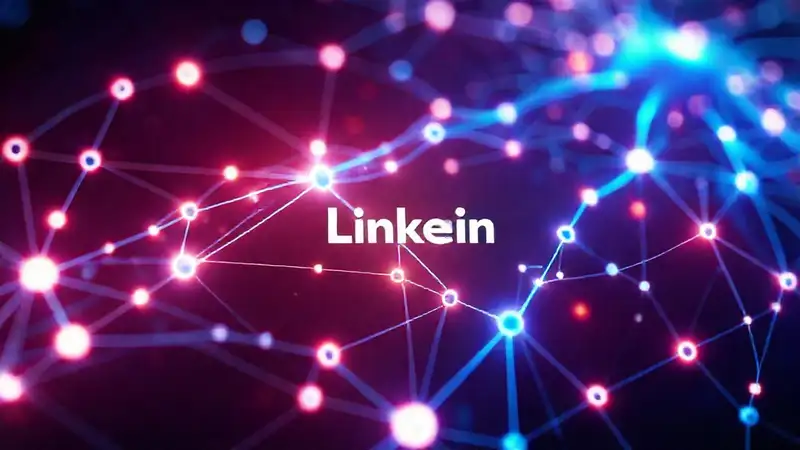
Graph Neural Networks (GNNs) represent a powerful tool for LinkedIn, allowing the platform to analyze the entire network of connections, not just individual relationships. GNNs treat LinkedIn’s network as a graph, where nodes represent users and edges represent connections. The algorithm learns from the patterns of activity within this graph – how information flows between users, which connections are influential, and which communities are thriving.
By leveraging GNNs, LinkedIn can identify individuals who are likely to be relevant to a user’s interests, even if they’re not directly connected. This expands the scope of recommendations beyond a user’s immediate network, exposing them to a wider range of potential connections and insights. Furthermore, GNNs help LinkedIn understand the dynamics of different groups and communities within the platform, enabling more targeted recommendations for specific professional interests.
5. Reinforcement Learning: Optimizing for Engagement
Finally, LinkedIn utilizes Reinforcement Learning (RL) to continuously refine its recommendation engine. RL algorithms learn by trial and error, experimenting with different content recommendations and observing how users respond. When a user engages positively with a particular piece of content – clicking on it, reading it, or commenting on it – the algorithm reinforces the association between that content and the user’s interests. Conversely, if a user ignores or dismisses a recommendation, the algorithm adjusts its strategy accordingly.
This iterative process allows LinkedIn to constantly optimize its recommendation engine for engagement. It’s not about predicting the perfect recommendation upfront, but about learning what works best for each individual user over time. The continuous feedback loop provided by RL ensures that LinkedIn’s algorithm remains responsive to changing user preferences and consistently delivers a highly relevant and engaging experience.
Conclusion
In conclusion, LinkedIn’s success hinges on its sophisticated use of AI, particularly leveraging techniques like collaborative filtering, content-based filtering, RNNs, GNNs, and Reinforcement Learning. These algorithms combine to create a personalized content experience that significantly enhances the value of the platform for its users. Understanding the principles behind these AI features empowers professionals to actively shape their LinkedIn experience, increasing their visibility and fostering valuable connections. It’s a dynamic system, constantly learning and adapting to the needs of its users – a testament to the ongoing evolution of social media and the power of artificial intelligence in driving user engagement.